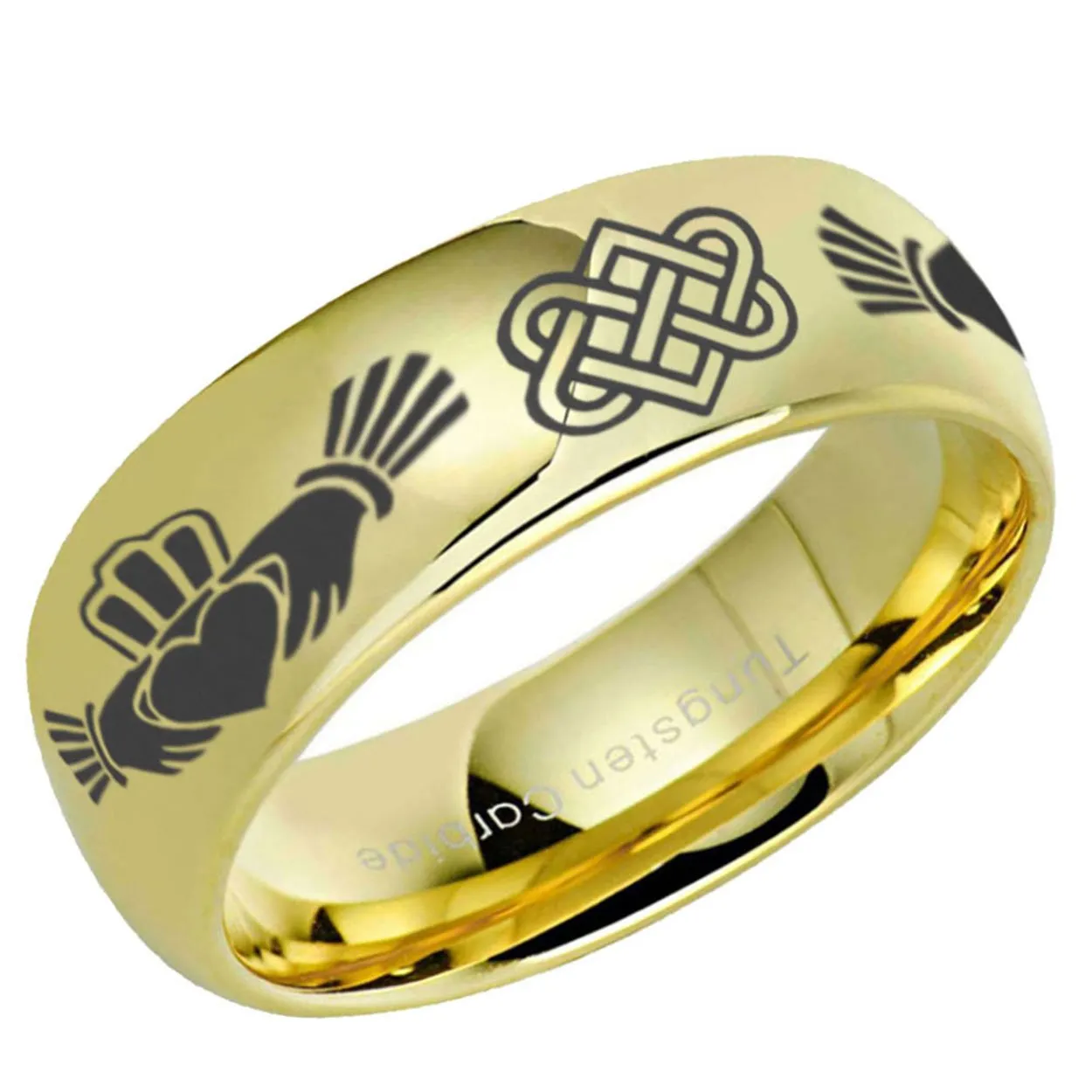
Claddagh Ring Meaning: History, Symbols & Which Way to Wear It
The Claddagh ring is one of the most recognizable designs in the world — two hands holding a heart topped with a crown. But few people know what those three symbols actually mean, the 300-year-old Galway legend behind them, or the traditional rules for which way to wear it.
If you’re considering a Claddagh ring — as a wedding band, a heritage piece, or a gift — this guide explains everything, including why tungsten has become the most practical metal for wearing one every day.
What Does the Claddagh Design Mean?
Every element of the Claddagh carries a meaning:
- The hands represent friendship.
- The heart represents love.
- The crown represents loyalty.
Together they form a complete promise: “Let love and friendship reign.” That combination is why the Claddagh works equally well as a friendship ring, a promise ring, an engagement ring, or a wedding band.
The Galway Legend: Richard Joyce and the Pirates
The most famous story of the Claddagh’s origin begins in the fishing village of Claddagh, Galway, in the late 1600s. A young goldsmith named Richard Joyce was captured by pirates and sold into slavery in North Africa. His master supposedly taught him his craft — and Joyce fashioned the first Claddagh ring in captivity, keeping alive the hope of returning to his sweetheart in Galway.
Years later he was freed, returned home, and gave her the ring: hands for friendship, heart for love, crown for loyalty. Whether every detail is history or legend, the ring has been made in Galway ever since, passed from mothers to daughters for centuries.
Which Way Do You Wear a Claddagh Ring?
Tradition says the direction of the heart announces your relationship status:
- Right hand, heart facing out (away from you) – you are single and open to love.
- Right hand, heart facing in (toward you) – you are in a relationship.
- Left hand, heart facing out – you are engaged.
- Left hand, heart facing in – you are married.
On a wedding band the heart points toward the wearer — the final stage of the story.
The Claddagh as a Wedding Band
The Claddagh’s meaning makes it a natural wedding ring: friendship, love and loyalty are the three pillars of a marriage. Irish families have used Claddagh wedding bands for generations, and the design has spread worldwide — you don’t need Irish roots to want its message on your hand.
Traditional Claddagh rings were gold. Today the most practical choice for a daily-wear band is tungsten carbide: it never scratches, never needs polishing, and holds fine engraved detail permanently.
Tungsten Claddagh Rings: Every Profile and Color
Our Claddagh collection is engraved in four classic profiles, each in multiple finishes:
- Dome – rounded and traditional; see the Irish Claddagh 8mm Dome in gold, the closest to the classic look.
- Step edge – crisp and modern; see the Step Edge black and gold.
- Beveled edge – angled edges that catch the light; see the Beveled Edge.
- Pipe cut – flat and bold; see the Pipe Cut rose gold.
Browse the complete Celtic & Irish Claddagh collection — all designs come in multiple colors including gold, silver, black, rose gold and blue, in widths from 4mm to 10mm.
Before You Order: The Sizing Rule
Tungsten cannot be resized — it’s too hard a metal. Measure your finger at the end of the day, and order from a store that offers size exchanges. If the fit isn’t right, you can exchange your ring size with us. For a full explanation of widths and fit, see our tungsten wedding band guide.
Frequently Asked Questions
Can men wear Claddagh rings?
Yes — Claddagh rings are unisex, and 8mm tungsten bands are one of the most popular men’s wedding band styles we sell.
Is a Claddagh ring a good wedding band?
Very. Its symbols — friendship, love, loyalty — are the foundation of marriage, and it has been used as a wedding ring in Ireland for centuries.
What’s the difference between Claddagh and Celtic knot designs?
The Claddagh uses hands, heart and crown; Celtic knots use endless interlaced patterns symbolizing eternity. Many of our rings combine both — see the full Celtic & Claddagh collection.
Will the engraving fade?
No. Tungsten carbide is one of the hardest jewelry metals, and the engraving is cut permanently into the surface.
Questions? We would love to hear from you. Contact us anytime.
Leave a Reply